
Many businesses depend on leads – not just for growth, but for survival. How would your business cope if some of your best enquiries never even made it to your inbox? This is exactly what happened to a national client of mine
When the client reengaged after a period of managing their account independently, they reported a significant drop in conversions. Even accounting for seasonality, they were convinced the Ads performance had declined.
The hidden risk of email delivery for lead generation
When a customer completes a contact form online, most systems default to sending an email notification to the business owner. The challenge is email systems for lead generation are fragile:
- Spam filters are unpredictable – even when many emails get through, identical ones can still be silently flagged as spam
- No confirmation – If an email is blocked there is no way to know – your prospect is simply lost to your business
- Changing algorithms – the rules powering spam filters change without notice
For my client, the result was a significant number of high value leads being silently rejected. A simple ‘whitelist’ of the sending domain at the server level resolved this, however having a separate system to manage leads added a layer of much needed redundancy.
I ran a sense check to rule out typical offenders:
- Google Ads tracking
- Implemented correctly
- Website form submissions
- Being completed
- Leads being received
- Not all of them
I first set up centralised online lead tracking, which allowed me to compare actual form completions vs the email notifications received by the client. I uncovered the gap – a silent but costly loss due to email deliverability.
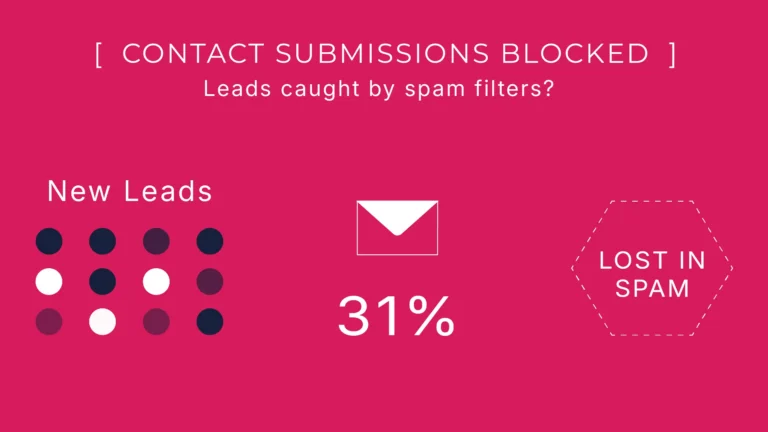
During the monitored period, 31% of leads never reached the client. That’s nearly 1 in 3 potential customers that the client was unable to follow up on.
After some detective work, I confirmed that despite adding the sending domain to the ‘safe sender’ list in the email client software, the emails were being blocked at the server level.
Before & after the fix
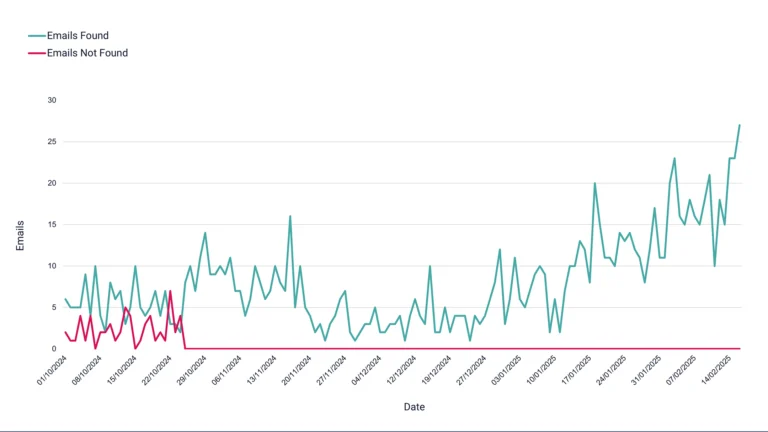
The chart shows how many leads were lost before the fix. Once we resolved the issue with the email servers, email deliverability achieved 100% success rates.
Note: The chart shows some short-term decline due to expected pre-Christmas seasonality. After the new year, I worked on account optimisation and started to roll out a new instant quote solution [insert link] – greatly improving lead volume as seasonality returned.
What this means for your business
If you rely on leads, you could be losing customers without even knowing it.
- 31% lost emails – would you know if potential customers couldn’t reach you?
- Customers reaching out without a reply sends the wrong message
- Incomplete data could lead to suboptimal ad spend decisions
My client was proactive when reviewing conversion data – comparing lead volume reported in Ads against email notifications. Normally, they would have flagged the discrepancy.
In an unfortunate case of bad timing, recent privacy changes had affected reporting accuracy – meaning Google Ads was underreporting by a similar amount to the spam loss. The result – the client understandably focusing on Ads performance.
Implementing a more reliable lead management system
To remove the dependency on email, a CRM is the way to go. For this client, a simple Google Sheet was sufficient, however we recommend clients look at solutions like Capsule or Monday.com for better lead management options.
- Email Use
- Email notifications should still be sent, but the primary delivery method should be a database.
- Submission Handling
- Every form submission is passed in real time directly to the CRM — ensuring no lost leads.
- Reporting & Attribution
- Tracking data is stored with each lead record, enabling better reporting and offline conversion uploads.
- Scalability
- The right tools and workflows are essential for managing high lead volume consistently.